I wasn’t prepared for the logistic nightmare of food preparation for the little one once he started eating solids. The idea I have is to prepare labor intensive ingredients (involved peeling chopping) in batches hence I decided to buy and prepare ingredients in bulk and freeze them.
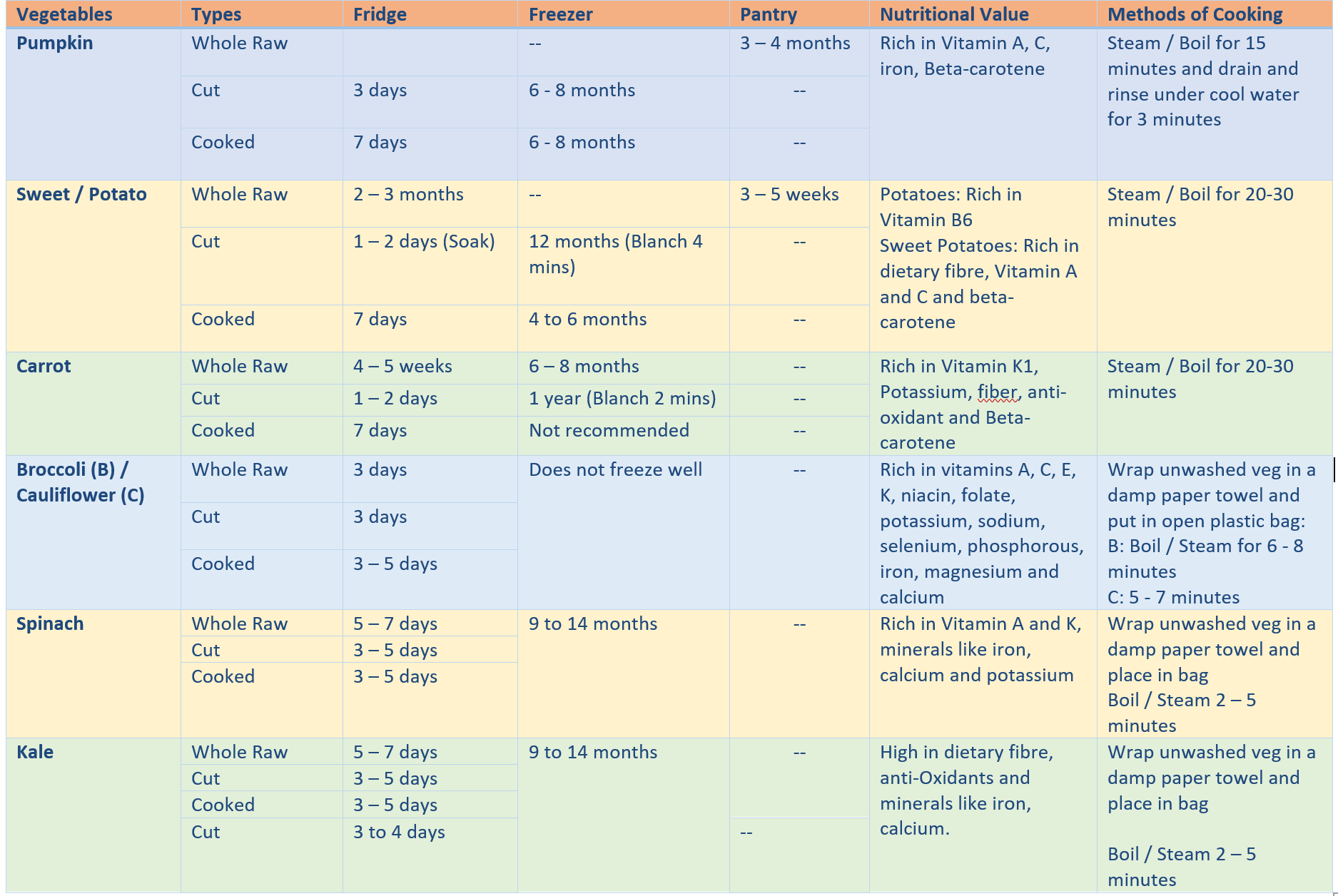
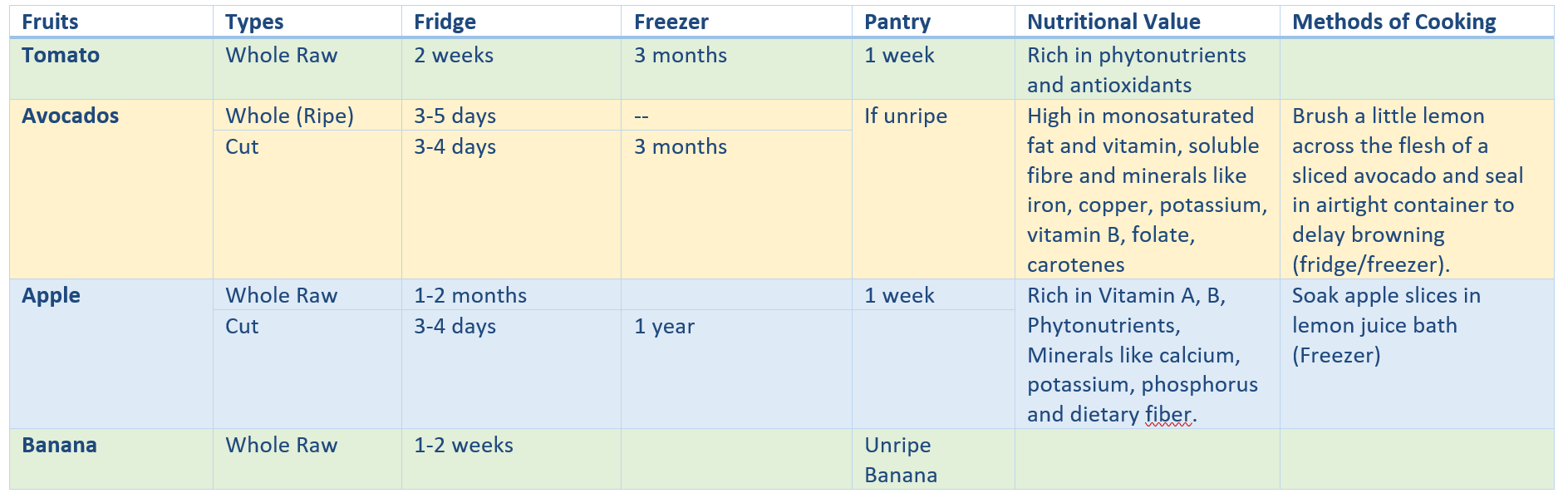
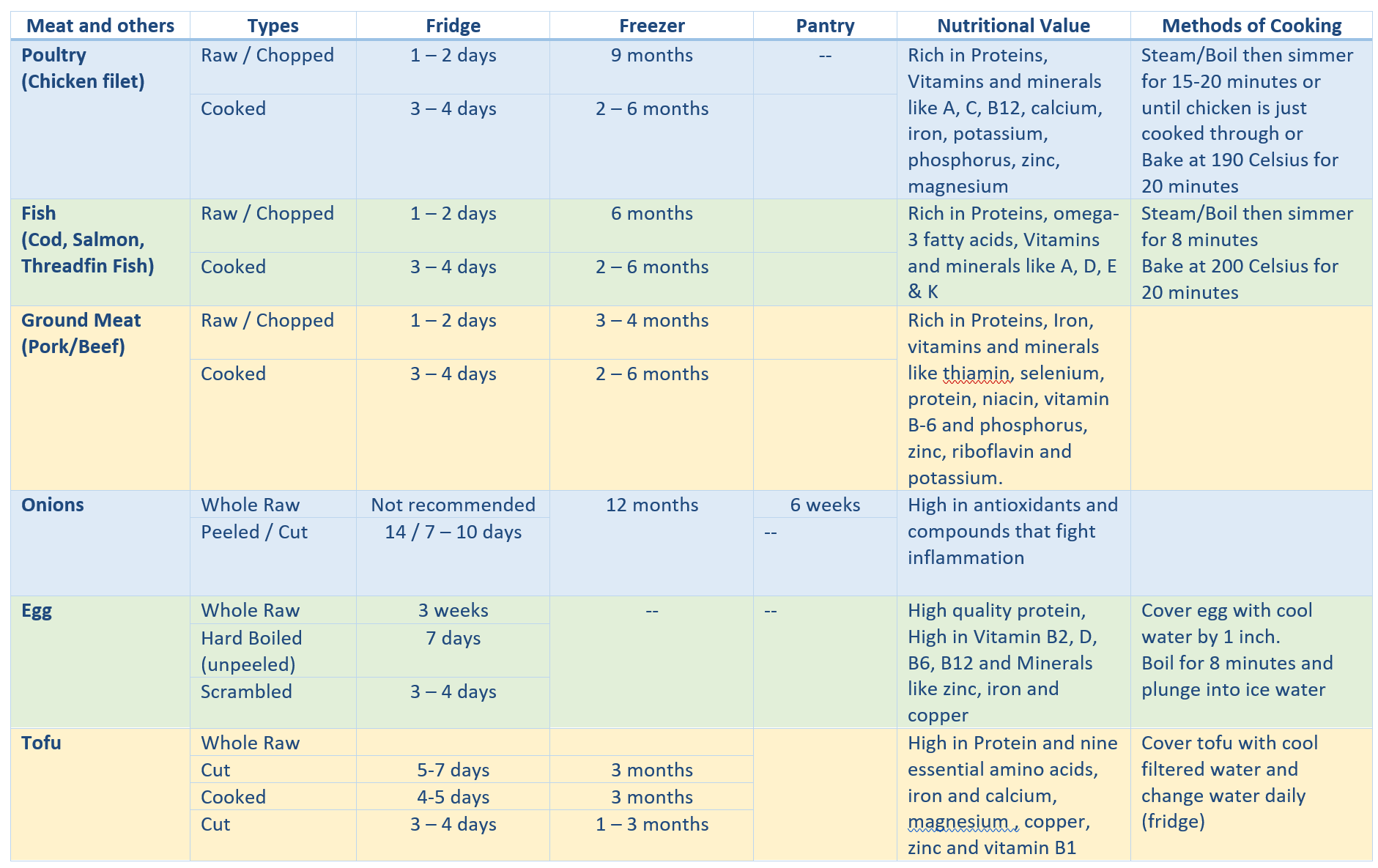
Meal Preparation means that I need to be aware of the storage life of the common ingredients I am using and the proper way of freezing. I have extracted the information from various sources (e.g. eatbydate.com, thespruceeat and healthline, National Center for Home Food Preservation to name a few) and consolidated it in a table for easy reference. I am totally clueless about cooking prior to this so the information helps me (seasoned chef, please feel free to enlighten me if you see anything wrong stuff here). However, I’m not sure how accurate the information is so please always do a smell and visual check before using the ingredients for cooking.
I started off with Vegetables Purees. The widely recommended method for freezing most vegetables is to first blanch them for a few minutes followed by submerging them in an ice bath, dry them and pack them in airtight containers. This helps to preserve the color, flavor and texture of fresh vegetables by reducing enzyme action. It also delays the loss of nutrients that can also happen with freezing and rids the surfaces of dirt and bacteria. If you do not want to blanch, try to remove as much air as possible (e.g. vacuum seal) when freezing in storage bag.
It is beneficial for your baby to have ingredients rich in:
- Beta-Carotene as it is an antioxidant that your body turns into Vitamin A. Vitamin A can strengthen immune system and help fights infection.
- Vitamin C has been shown to increase white blood cell production, help immune cells work more effectively and make wounds heal faster. B-complex vitamins (e.g. riboflavin, thiamin and vitamin B-6) are essential in maintaining red blood cells and keeping your nervous system strong and healthy.
- Vitamin D enhance the absorption of calcium and phosphorus and this strengthens the bones.
- Omega-3 fatty acids (fish!) play important roles in brain function and development
- Dietary fiber helps to prevent and relieve constipation while important minerals perform various functions, like strengthening your bones (calcium), building muscle (potassium) and filtering out waste (phosphorus).
- iron is critical for a baby’s growth and cognitive, neurological, motor and behaviour development.. At 6 months baby’s iron stores are depleted so a food source is needed. Pork is one of nature’s best sources of iron. Frequent consumption of pork, meat, poultry and fish, can contribute considerably to meeting infant iron requirements because the heme iron provided by animal sources is more readily absorbed than non-heme iron found in plant-based foods such as infant cereals
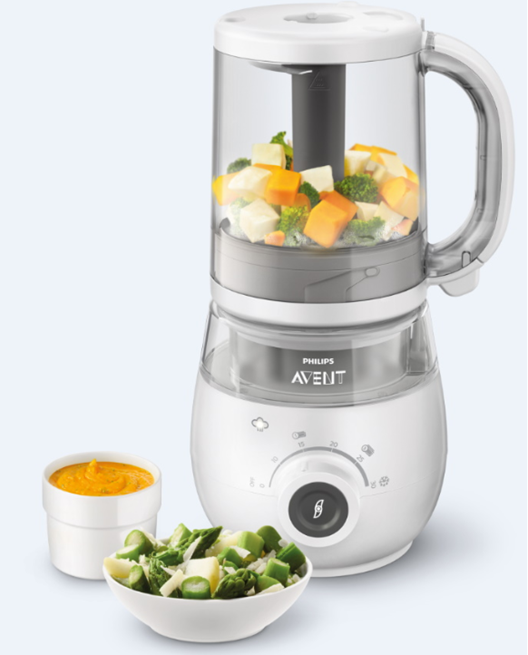
I purchased the Philips Avent 4-in-1 Healthy Baby Food Processor Steamer Blender which allows me to make baby purees conveniently. Step 1: Transfer the ingredient(s) into the jar and steam, Step 2: Turn the jar over and puree until you reach your desired consistency,